Wednesday, August 27, 2014

Microscope: Looking at Living Media (India Today Group), Performance & Birla's rumored exit

Not many Chartered Accountants have taken a media company to the heights that Aroon Purie single-handedly has. The Lahore-born eminent journalist, who is almost synonymous with those trademark specs and his pink coloured tie, gave shape and firmness to his father Vidya Vilas (VV) Purie's tabloid newspaper called India Today launched in December 1975, the year which witnessed the then PM Indira Gandhi declaring the infamous Emergency. Today, Living Media -- the unlisted holding company of the India Today Group -- is the platform for the Indian media conglomerate which has interests in magazines, newspapers, books, radio, television, printing and the Internet. It has even attracted industrialist Aditya Birla as an investor, who is of late rumoured to be keen on an exit. We take a look at the good, bad and ugly of 'India Today'...


Staring at losses: Birla arrives

Living Media, by its own admission, competes with Bennett and Coleman Company Limited; HT Media Limited; Outlook Publishing (India) Private Limited; Images Multimedia Private Limited; Worldwide Media Limited; Television Eighteen India Limited; New Delhi Television Limited; Media Content & Communications Services (India) Private Limited; Anand Bazar Patrika Private Limited.

Its business segments comprise of the following: 1. Publications - Publishing of various magazines 2. Trading - Sale of merchandise, books, CDs, etc. 3. Distribution - Distribution of external publications 4. ITGOL (India Today Group Online)-Online advertisements and mobile value added services. 5.Others

As earlier said, its promoters are Editor-in-Chief Mr. Aroon Purie, Mrs. Rekha Purie (his wife), Mr. Ankoor Purie (his son), Aroon Purie & Sons (HUF), All India Investment Corporation Private Limited and World Media Private Limited (holds over 50 per cent stake in Living Media). Mr. Aroon Purie has been irrevocably appointed by each Promoter as its representative for certain identified purposes. Besides, individuals with significant influence include:- Ms. Koel Purie Rinchet (Daughter of Mr. Aroon Purie), Ms. Kalli Purie Bhandal (Daughter of Mr. Aroon Purie), Mrs. Madhu Trehan (Sister of Mr. Aroon Purie), Mrs. Mandira Purie Fawcett (Sister of Mr. Aroon Purie) & Mrs. Leela Purie (Mother of Mr. Aroon Purie).

In 2010 fiscal, Living Media reported standalone sales of Rs 348-odd crore. In 2011, this rose to about Rs 375 crore. More importantly, the company swinged to Rs 14.3 crore profit in 2011 from a loss of about Rs 12.2 crore in 2010. The profit in 2011 was more like a fleeting wind. In fiscal 2012, Living Media -- which has its registered office in the upmarket Connaught Circus area of New Delhi although it has shifted significant amount of operations to Noida -- sales came down a bit to Rs 369 crore but the bottomline turned red as it racked up losses (after tax) of Rs 18 crore. 

In 2013 fiscal, Living Media revenues fell further to Rs 341 crore and losses deepened to Rs 26-odd crore. Blame it on the global economy and/or the local economy, the advertising market has been subdued, to put it mildly, in the recent years. Mainly a printer and publisher of magazines, Living Media was under pressure as corporate marketing initiatives were trimmed and ad budgets further snipped. When you have 26 magazines, problems are in dozens. But Living Media is not just another company. It has more. Like in previous years, Living Media did what it could.


It's business in Retail under brand name 'Media Mart' was further consolidated to optimize future market by concentrating more on outlets at Airports, Shopping Malls besides outlets at Metro Stations. Possibility of having outlets in other formats like independent Kiosks, IT Parks, Office Complexes, Educational Institutions etc. were being looked at. This, Living Media management, figured should result in higher volume and consequently increase in top-lines for retail business.

Some more housekeeping was also done. During 2013 fiscal, the company's joint venture agreement dated 1 st December, 2003 with HarperCollins Publishers Limited, UK was discontinued.

To make itself a pure-play media firm, Living Media transferred its Non-Media Undertaking with all assets and liabilities to Thomson Press (India) Limited.

Soon enough, Living Media along-with promoter shareholders entered into Shareholders Agreement (SA), Share Subscription and Purchase Agreement (SSPA), with IGH Holdings Private Limited -- an Aditya Birla Group Company. Pursuant to these agreements, the holding company of Living Media -- World Media Private Limited (controlled by Arun Poorie etal) sold 14,129 equity shares to IGH Holdings Private Limited & Living Media issued 53,798 fresh shares to IGH Holdings Private Limited.

So, the loss-making company got Rs 480 crore at one-shot as it was valued at Rs 1,750 crore by virtue of the price paid by Aditya Birla group firm for getting 27.5 per cent stake. Later, the industrial conglomerate pumped in atleast Rs 70 crore in exchange for more equity (9,784 shares)-- making the total investment upwards of Rs 550 crore.


One may have think why so much of money for Living Media but possibly the answer lies in TV Today Network (worth Rs 320 crore in May 2012) which is listed on bourses. Living Media controls over half (57% odd) of it. Birla-whose aunt happens to be HT Media owner Shobhana Bhartia-was convinced that Living Media is a good play on the "sunrise sector". An IPO dream was floated: the investor told about a public offering within November 2018. In case it didn't happen by then, IGH could hike its stake upto 49 per cent.

Here, I would like to add that the traditional media reports on Aditya Birla group's investment in Living Media seem a bit off the mark. See here and here. They, however, were bang on when it came to reporting the development of Birla asking merchant bankers to explore an exit from Living Media in about 2 years!

How It Lives Media

TV Today Network has channels like Aaj Tak and Headlines Today. In 2012-13, it reported income of Rs 320 crore and profit of Rs 12.2 crore---margin of less than 4 per cent.

Another key subsidiary of Living Media is 64.85% owned Mail Today Newspapers Pvt Ltd. Its a key arm not because it publishes Mail Today newspaper, established in November 2007 in a joint venture with British newspaper Daily Mail. MT's penchant for young talent and young readers --- more often by default than design --- is unique. The management expects the paper to go through a gestation period of 7-8 years, for a country like India. MT is part of a key business plan that was pitched to Birla. Why? Most probably because of its losses and the drag it caused on the group financials/earnings. In 2012-13, it logged sales of Rs 39 crore but losses were at a whopping Rs 29 crore.

Like Mail Today Newspapers Pvt Ltd, Living Media has another key subsidiary e-commerce unit BagitToday.com. As per information, this business racked up over Rs 16 crore in losses in fiscal 2013.

Running the overall business has never been a problem for Mr. Purie. Notwithstanding the large real estate assets which can be mortgaged to take sweetheart loans, the company has always been able to put it's hands on the required working capital. Salaries have been paid on time. Creditors rarely complain. Events held by the group have seen the who's who of the world arrive.
Now comes the secret business plan. The Initial Business Plan for the Financial Years ending 31 March 2013, 31 March 2014 and 31 March 2015 is a rolling three (3) year Business Plan and had been adopted by the shareholders. Complete with projections, the plan was set in motion to be prepared for an IPO.

Living Media's losses in Mail Today and BagitToday.com businesses (including its holding in India Today Retail and India Today Merchandise) alone were Rs 45 crore. Hence, the company promised to take all reasonable measures for increasing the business prospects and profitability of Bagittoday.com Target Business and the Mail Today Target Business.


In the event that either Bagittoday.com Target Business and/or the Mail Today Target Business do not perform in accordance with the projections provided in the Business Plan and the actual average audited EBITDA for the Financial Years 2013, 2014 and 2015 of such Identified Business is lower by seventy per cent. (70%) of the average target EBITDA of such Identified Business for the Financial Years 2013, 2014 and 2015 as set out in the Initial Business Plan, Birla was entitled to trigger an event of strategic sale of either or both of the Identified Businesses at its sole and absolute discretion at any point of time subsequent to 15 September 2015 by issuing a notice to Mr. Purie. So, if at all such event happened -- this was to be after Sep 2015.

So, why does he want to leave so soon? Between May 2012 and now, some things have happened. 1) Modi government stormed to power at the Centre. 2) Shekhar Gupta joined as the vice-chairman of the India Today Group. He resigned from his post as Editor-in-Chief of the Indian Express and moved out officially in June, 2014 after being in the position for 19 years. 3) In an attempt to ensure plurality of news and views, broadcast regulator Trai very recently suggested restriction on political bodies and corporates entering the television and newspaper business.

Update: According to reports, Gupta has quit his position. Will stay on board as editorial adviser. See here.

From an investment perspective, Living Media is as well-placed as anybody. For Aditya Birla, pumping more funds clearly ain't an issue. IGH is empowered to invest upwards of Rs 12,500 crore.


Hasty resignations & salaries

For the year ended 31st March, 2013 Mr Aroon Purie got gross pay of Rs 1.63 crore. Director Anil Mehra got Rs 1.43 crore. Ashish Bagga, Group Chief Executive Officer, got an eye-popping Rs 4.41 crore. Dinesh Bhatia, Group Chief Financial Officer, got Rs 1.42 crore. Oxford educated Kalli Purie Bhandal, designated as Group Chief Synergy Officer, got Rs 1.08 crore. Mala Sekhri, COO Lifestyle Group & Music Today, took Rs 90.13 lakh.

Interestingly, both Bagga and Bhatia apparently had resigned as directors on March 31, 2014 due to what they call "personal reasons" or euphemism for DONT ASK :) Soon after Bhatia got reappointed at an annual package of Rs 1.76 crore plus PF, gratuity, medical insurance etc. However, Bagga--famous for his red trousers-- got reappointed at an annual package of Rs 4.1 crore plus PF, gratuity, medical insurance etc. Did he strike a good deal?

Comparisons of Bagga's pay packet with CEOs of rival media companies are natural. On that count, he seems to be at par. While big daddy BCCL CEO Ravi Dhariwal took home a whopping Rs 11 crore in the last reported financial year (including performance pay), CEO Rajiv Verma of HT Media earned Rs 4.68 crore in 2012-13 while newly appointed CEO Of Kasturi & Sons CEO Rajiv Lochan is contracted to earn Rs 1.75 crore.

As always, feel free to drop your comments/criticism/praise in the "Comment" section below. Till the next time.

Images: Sourced from the Internet. If anybody has any objection to use, please notify and it/they will be removed within 24 hours.

Wednesday, August 20, 2014

What New Kasturi & Sons CEO Rajiv Lochan earns

History will possibly judge the new CEO and MD of Kasturi & Sons Ltd (KSL),  the publisher of The Hindu, kindly. Or perhaps not. But one thing is clear. Rajiv C Lochan has got a good 5-year deal including a 'golden parachute'. Read on to know why...

Some can say that former McKinsey hand Rajiv C Lochan has his task cut out as the second chief executive of Kasturi & Sons whose cash cow 'The Hindu' was interestingly first launched in 1878 to support the campaign of Sir T. Muthuswamy Iyer for a judgeship at the Madras High Court.

On the other hand, it can be argued that Lochan, 43, couldn't be in a better position as Managing Director & Chief Executive Officer. He is leading all the non-editorial operations of this firm at a time when the promoter family is back overseeing the institution they so fondly built brick by brick.


Lochan was brought in June 2014 to fill the void, some say, created by Arun Anant who quit as CEO in October 2013 along with The Hindu's editor Siddharth Varadarajan. Anant, the company's first ever chief executive, now works as Director Revenue and Strategy at HT Media, which found its beginning in 1924 when its flagship newspaper Hindustan Times was inaugurated by father of the nation -- Mahatma Gandhi.

Reams have been written about how in October last year, Kasturi and Sons chairman N Ram used his casting vote to effect a change in top management at KSL. After the exit of Anant and Varadarajan, N Ravi took over as editor-in-chief of The Hindu and Malini Parthasarathy as editor. Yesterday, KSL even appointed two corporate citizens as independent directors on its board to give it a fresh look.

I will not go into those details. That's history. As an observer of the media and as one who earns his daily bread from journalism, I was curious to know what Lochan would 'get' for being the top KSL executive, non-editorially speaking of course.


Before we delve deeper, it is important to understand the circumstances Lochan, who graduated from IIT, Madras and has advanced degrees from the Massachusetts Institute of Technology and Columbia Business School, has come in.

From about Rs 58 crore in 2011-12 fiscal, net profit of KSL on a standalone basis in 2013-14 has fallen to apparently in single digits. Revenues are in the Rs 1,000 crore range but rising competition from a ferocious competitor like Bennet, Coleman & Company Ltd (BCCL) that publishes 'The Times of India' and 'The Economic Times' to name a few.

A host of reasons are affecting most newspaper publishers. They include low growth in advertisement market due to poor economic growth, Times Group aka BCCL having control over 50 per cent of national print market and offering a wide product basket that virtually elbows everyone out and the clear discomfort at adopting equity swap deal strategy that is driving handsome profits at those 'comfortable' with it.

Coming back to Lochan's remuneration. How much money is he making? That's all we want to know, right? So, here it is.


Firstly, what people tell me is that Lochan is entitled to a salary component of Rs 6.62 lakh a month or Rs 79.44 lakh a year. Next, his house rent allowance (HRA) is sixty per cent of that salary i.e. Rs 3.97 lakh a month or Rs 47.67 lakh a year. Thirdly, his remuneration includes gas, water & electricity expenses is subject to 10 per cent of his salary i.e. Rs 66,200 per month or Rs 7.94 lakh a year.

Then, there is a liberal medical reimbursement component. leave travel concession, club fees (for two clubs), personal accident insurance, provision for car and telephone, besides provident fund etc.

Fifth, is performance pay. Lochan would get a share of profits above Rs 50 crore every year. Currently, this share is 1.5 per cent. Put simply, if KSL would log profits of Rs 75 crore, in that year Lochan would get 1.5 per cent of Rs 25 crore above the Rs 50 crore high water mark.

Lastly, there is a provision for 15 per cent of salary i.e Rs 11.92 lakh a year as contribution by the company towards a superannuation fund. Put together, this is easily over Rs 156 lakhs a year or Rs 1.56 crore without bonus/performance pay.

So, we know Ravi Lochan on a pre-tax basis would take over Rs 1.5 crore every year as minimum remuneration for leading all the non-editorial operations of KSL that publishes The Hindu, The Hindu Business Line, Frontline and The Hindu (Tamil) among others.


After Anant's exit, which some say was acrimonious to say the least, Lochan's remuneration contains an interesting item. Called Golden Parachute in HR parlance, this is usually an amount the company pays a top employee if employment is terminated. Lochan is entitled to get Rs 175 lakhs or Rs 1.75 crore in the event of KSL terminates his services before the expiry of his 5-year term. So in case the Kasturi & Sons Ltd board has a change of heart, Lochan doesn't lose that much monetarily.

Comparisons of Lochan's pay packet with CXOs of rival media companies are natural. On that count, he seems to be potentially earning a tad less. While BCCL CEO Ravi Dhariwal took home a whopping Rs 11 crore in the last reported financial year (including performance pay), Karan Ahluwalia--Chief Operating Officer of Directories Today, The India Today Group-- gets a basic remuneration of Rs 1.06 crore. Dinesh Bhatia, CFO at India Today Group, contracted cost to company is about Rs 1.8 crore per annum. In HT Media, CEO Rajiv Verma earned Rs 4.68 crore in 2012-13.

Disclaimer: I worked for The Hindu Business Line for a year and a half in 2006-08.

A special round of thanks to everybody who made my blog cross the 1,500-page views mark. That too in less than 8 months and just 8 posts :)

As always, feel free to drop your comments/criticism/praise in the "Comment" section below. Till the next time.

Images: Sourced from the Internet. If anybody has any objection to use, please notify and it/they will be removed within 24 hours.

Wednesday, July 30, 2014

Which football style should your investments mirror


The 2014 World Cup extravaganza is over. Sadly. The winners, Germany (Die Mannschaft), have taken the cake and eaten it too. Runners up, Argentina (La Albiceleste) are cooling their heels. Like in football, like in investments, scoring more goals than the opposition is a sure-shot way to success. However, the style plays an important role too.


Often understated, the style of your investments can make or break the aim of your hard-earned money. Some save to get their daughter/son married, some play Uncle Scrooge to buy that dream car or house...wishes are endless. Saving is the key. But saving alone is not enough. Investing money in the right manner is like having a 'super sub' Mario Götze. He will score when it matters.

For the sake of simplification, we will look at the top (5) ranked footballing nations and draw parallels with investment styles.


Spain - If you are Spanish football fan, you know what is Tiki-taka. For the uninitiated, tiqui-taca is a style of play in football characterised by short passing and movement working the ball through various channels, and maintaining possession. In short, Tiki-taka moves away from the traditional thinking of formations in football to a concept derived from zonal play.

As an investor, how do you employ Tiki-taka? In the ever expanding world that is 'investments', short passing is small investments at regular intervals. Possession in football is what is continuous monitoring of your investments.

The obvious pros are sometimes, as we saw in this World Cup, out weighed by the cons. Systematic investments bet that assets will only go up directionally. Regular peeks at your portfolio can be quite taxing as market volatility, to most people, is quite difficult to handle.

Tiki-taka could be for the deft managers or traders who know their game well. The investment style involves moving investments around and taking asset class views where often major churn can happen.


Germany - Between 1899 and 1901, prior to the formation of a national team, there were five "unofficial" international matches between different German and English selection teams, which all ended as large defeats for the German teams. This is the ugly history of 2014 Fifa World Cup champions.

Over the years, the German style has evolved -- three-man strike teams, quick counter attacks, moving into free space etc etc. In 2014, the World Cup scalp has come largely on the account of diversification, unity of the team and a good defence & midfield. Star players are rare. Its a machine. Screws, bolts, rods...you get the scheme.

If you were to mirror the German style as an investor, you would have to avoid keeping all your eggs in one basket. Diversify across assets (or different stocks). Thats step number 1.

The second step would be to develop a core portfolio. Remember, whether you are young or old, the core team in your portfolio would have to comprise of the right mixture of stocks and bonds. Bonds help you weather financial storms while stocks add that alpha to your portfolio.

The German football teams always have had good goalies. Be it Kahn or Neuer, good goalies are to a football team what conservativeness is to your portfolio. The trick is to play safe and play smart.

Lastly, the reliance on expert advice is paramount in the German portfolio. Coaches and professional advice is extremely important.

No matter that Rudi Voeller's side had reached the World Cup Final in Yokohama two years earlier, group-stage elimination from Euro 2004 was seen as proof that something needed to be done. Their football association built youth training centres across the country for 11- to 14-year-olds, national youth teams were professionalised...

You can always go wrong. Meander away. That is the time to use expert advice and ACT on it.


Brazil - Anyone who watched Germany tear into Brazil a few weeks back would surely take issue with that, and among Brazil fans there is a gradual acceptance that the country that once ruled the world was playing catch-up in its first World Cup on home soil since 1950. But the Samba beat was not always like this. Free flowing, creative and spontaneous. Power with passion. History the Scots gave the Latinos the football we see in Brazil today. Closed spaces. The deft handling of football and the light as well as heavy touches. Reams have been written. How do you replicate it, if at all, on the investment field?

Here's how. Investments are about money and putting them in a particular way. The Brazilian way hinges on attack. Allocate most money in stocks. Sure, the occasional market crash would spook you but stocks add alpha to your portfolio like nothing else does. The world's most loved soccer nation does not defend, much. Purists may complain so keep stocks allocation at 80 per cent.  10 per cent in debt and the balance 10 per cent in gold. Remember, just allocating a lion's share of your funds in stocks isn't that Brazilian way. That country depends on it's youth. Naturally, your Brazilian styled portfolio strategy will have smallcap and midcap stocks that have the potential to outsmart seasoned largecaps. Sure the risk is too much. But that's what Brazil is all about ain't it? No pain. No gain.


Argentina - If there is a pressure on any team to capitalise on its superabundance of talent, the pleasant discomfort of an embarrassment of riches, its Argentina. Don't confuse the 'me and Messi syndrome' in creoles with the real argentine style. The land of maradona plays well by virtue of small perfectly balanced ball-players and a style based on rapid “vertical” attacking movement. It's sometimes anti-football, as critics have sometimes claimed. The laziness in passes of Argentina is actually deliberate. 'Shock and awe' is a tool that they use best. The dribbles, the long runs into enemy camp while maintaining ball possession at all times are some ways the argentines employ to frustrate the opponent on the football field.

Make no mistake about it. They are a country of greats. Theirs is not a gentleman's game. It was never meant to be. When you adopt this style for your portfolio, be very careful. Typically, this will be a dynamic portfolio where you as the fund manager will take calls on assets both short term and long term and invest accordingly. You will not be consensus. There will be method in what others would call madness. You will buy when others sell. You will sell when others see a bull run setting in. The execution of your argentina-sque investment plan will not be dependent on just stocks or just debt or their combination. It will be on agility and nimble footedness. When markets turn turtle, you will quickly act. It is essential that you keep 25 per cent of funds free or not invested. These will help you encash opportunities when they throw themselves at you. Also, you will not depend in a Messi. That would be self-defeating as we saw in that football match. You need balance, at all times. Start out defensively but not afraid to make deep attacks when you see the goalie. 

All investments should be done with expert advice. After all, an expert is an expert. Good luck.


As always, look forward to your feedback. Leave it in the comments section below. Till the next time. 

Thursday, June 12, 2014

Infy new CEO Sikka and NaMo are similar but N R N Murthy not a Gandhi...

Some part of new Infosys CEO Vishal Sikka ' s early life was spent in Vadodara. That's all that he shares with new Prime Minister Narendra Modi. Yet the two leading men in their own right share much more in common than the just a place. Sikka was brought in by none other than N R N Murthy, who has showed an attached detachment unlike the first family of Indian politics. Read on to know why ...

Before delving into Sikka and Modi, a few words on Murthy. Maverick. Entrepreneur. Monk. He came back when he saw his baby sinking. Can't fault him on that. Improved margins by 200 bps. Cut flab. Retained the people he wanted. Passed the mantle. Left.

Murthy isn't a Steve Jobs. He never set out to be one. He wanted to give Infosys to somebody who would treat the company like it was to be run. Emotions aside. The job of an enterprise is to enhance stakeholder value ethically and financially. He now goes. Gandhis unfortunately have never been able to do that. As Murthy walks into the sun set (for the second time), he can like a father from a middle class family, be happy to hang up his boots. The successor is in place. You have to respect him for that.

IT'S NOT JUST ABOUT TIMING


Sikka and Modi have been anointed as chiefs in about the same time. However, the sands of time don't bind them.
Outsiders - The real Gujarati and the fake Punjabi were immediately labelled as 'outsiders' when they came. Modi lacked the national exposure while the former SAP executive lacks the edge to leaf a services company like Infosys, critics have jumped.
The respective chief executives of the Indian economy and the pioneer of making codes into a money making machine actually have an advantage for being out of the system. Modi's proven administrative abilities as a chief minister are potent as Sikka's being part of a software company. At Infosys, which often deals with implementing products of software companies, Sikka is actually their man on the 'inside'.
Both Modi and Sikka are keen on building their own team. To be honest, if the people they replaced were good...that would not put the newbies outta business. Setting up their own core group and the freedom to do that is what will define their successes.

SPEAKERS WHO ARE GOOD LISTENERS

Sikka, a veritable tech guru, is known for being a cohesive force. Like a glue. A major reason is that he listens. He never has all the answers. To all problems. But the intent to solve the problem is clear. The world where Infosys was born in 1981 is very different in 2014. The company is going through a midlife crisis. Sikka isn't the new fling but  marriage material. If Infosys is not to be sold in parts to the highest bidder, Sikka is the only real chance to do so and fast.
NaMo 's ability to piece together people from different walks of life and ideologies is already a proof of concept. Amit Shah was his choice. I am no fan of Modi. But we have to admit he has been a fantastic leader so far. Cynics listen to him in rapt attention. That's half the job done.

RESPECTED BY OLD GUARD, LOVED BY NEW


Sikka who would be 50 in three years is not by any measure young. Ditto for Modi who is in his sixties. Yet age doesn't matter for them. While Sikka has clearly the blessings of Murthy who built Infosys from scratch, Modi earned his title by proving his mettle where it matters. Critics can argue Nilekani, Kris and Shibulal were also selected by Murthy. Shibulal was a lesser successful experiment to say the least. What guarantee is there that Sikka is not the "old fool's" historical mistake? Many ask. Breaking a tradition makes little sense in a deeply religious country like India, they add.
This can't be farther from the truth. When BJP and Infosys sought to select their future leaders, they went for performance and pedigree. It's that easy. Look at the alternatives inside their institutions and the bias is clear. Sikka is global talent respected and yearned by all and the Sundry. Modi, as I have mentioned earlier,  is an experienced campaigner who has brought glory almost always. Both now would lead two entities that are massive yet open to change.
The rhetorics don't impress India and Infosys anymore. It's time to deliver. Sikka like Modi are the pizza guy at your door.
Till the next time.
Feel free to drop in your views. Look forward to it.

Wednesday, April 30, 2014

'Diggy-gate' and the failure of media

By Kumar Shankar Roy

There's an old saying: Raise no more devils than you can lay down. Indian media has raised one too many.

67-year old Congress leader Digvijaya Singh's candid pictures with TV anchor Amrita Rai have given the 'news-hungry' sections of some media persons a sitting duck, as they say. It could never have been so easier. Rabid readers and the oh-so sacrosanct 'reader interest' has trumped decency and common sense once again. If it sells, it must be news. Its a sorry state of affairs that am afraid we have created.


Lies, Deceit, Propaganda...then comes sex. Lok Sabha elections, which saw the seventh phase completing today, has now come the full circle. 'Diggy-gate' was the proverbial cherry on the top for media wanting to break news (never mind if some hearts are also broken). The elections started on a sombre note with development being the plank but now, just like always, has been reduced to a circus -- thanks to media.

People who support this type of journalism where the privacy of individuals, one being in full glare of public life and the other who brings others into public life, stands violated by all counts, have given me many what-they-say are "solid" reasons. My advice to them -- Get a life!


Digvijaya Singh, who has earlier been ridiculed for gaffes and no stranger to controversies, hasn't done any crime this time round to my mind. As he admitted on Twitter, he possibly loves this woman and wants to have a stable relationship. The only possible discomfort could be his that the 'news' of his relationship comes within months after his wife, suffering from cancer, passed away. But still, its his life and he has the right to live it in a way that is not deemed illegal.

The lady in question, along with her husband, has apparently filed for a mutual consent divorce.

The problem is righteous people and those priding themselves on high moral grounds think they are superior. They will tell you how this relationship is possibly illegal as the lady is not divorced.

I want all of you who are reading this blog to step back from all these things. Let me tell you why I feel this entire episode reeks of failure of our media to dissect news from cheap sensationalism -- yellow journalism as they call it.

As journalists, We are taught and eventually trained to separate the wheat from the chaff. Its what we aspire to do everyday. In this case, however, that has not happened.


I will not go into the details of the publication which gave great prominence to this purported pictures that were floating around social media apparently on Tuesday. The publication, which is trying to become a mainline and aspires to champion real causes, is unimportant.

1. The 'scoop': When a paper, which wants to be taken seriously, publishes private photos of a politician, its the lowest level a paper can stoop to. What if next some people publish private pictures of the editor or circulate audio tapes of private conversations he/she had with someone they are attracted or in a relationship to?

The time has come to define news in the 21st century.

The old and stupid way of saying "when a dog bites a man that's not news and when a man bites a dog that's news" is outdated as a dinosaur. Media has to respect people and the lives they lead. When social media is abuzz with private pictures of any person, be it a politician, film-star or even a porn star, it is a "right" to exercise control/ignore moronic urge to publish them.

The media enjoys this right because those who have bestowed them to the media feel we are worth of it. If not exercised properly, the day may not be far that the "right" could be under scanner and eventually taken away.


2. The follow-up: If a paper has violated the privacy of an individual, its competitors cannot simply claim to be "just doing follow-ups" and print everything a day later with greater dose of 'masala'. A specific instance of failure then becomes collective failure.

When an editor is hauled up by police authorities and faces the risk of being jailed by corporate interests, the flag-bearers of journalism issue statements. However, they are conspicuous by their silence on matters such as this. Not even a word. Its as if that when politicians are targets of low-level journalism (read sensationalism), "we" are okay with it.

A video, sets of private pictures or libelous allegations -- if the target is a politician, especially someone who has a history of being lambasted by all and the sundry -- we are okay. This simply cannot go on. There has to be a stop and the time is now.


3. Phantom reader: Lastly, journalists cannot claim to dish out crap and invade people's lives by simply saying its "reader interest". As a newspaper reader or a TV viewer, have you ever come across a reader/viewer survey asking you/us about what we really want to see? My guess is as good as yours. Never.

Powerful journalists (read racketeers) choose what "they" want to carry and their ultimate defense is "reader interest". The social media is full of sane readers/viewers who have taken and will continue to take strong objection to vile methods practiced by some media outlets. Those real views, however, never get due coverage. Only those, preferably jokes and 'smart' one-liners, are cramped together and again "sold" as news.

All this begets a simple question, the answer for which is probably known. Traditional media has failed itself. In its urge to revitalize itself with new-found zealousness/reader interest, it is publishing crap, shit and poop day after day.


The reader is not your wife. Respect and you will get respect.

All readers of this post are free to criticize my views, as always. I will publish them all. Do drop a line and share this post on your networks if there is even an iota of something you like. Conversely, share even if you don't like so that I get a barrage of notifications to correct myself :)

Adios. Till the next time.

Image courtesy: 1. http://images.sodahead.com/polls/002787187/1923255931_privacy_xlarge.jpeg
                         2. https://blogger.googleusercontent.com/img/b/R29vZ2xl/AVvXsEjg1FHwfVuTzj3t9sHTXKRelWlJlmHA9620JJ7NSlSyS5DWbQbp8hEiNCFXvtdTYi_CJod20shvPBg01Wa4lWLTAcSBNQIQbulJWtXu3pLl5j2AeTIQnXChyphenhyphenX9wMAKWH-M-X4pp7a_9G60F/s1600/a+media+fail.png
                         3. https://www.mediabistro.com/agencyspy/files/original/PressHat3_2.jpg
                         4. http://cbpr.me/blog/wp-content/uploads/2012/02/Pitching-to-Journalists.jpg
                         5. http://cdn2.business2community.com/wp-content/uploads/2012/08/social-media.jpg
                         6. http://media.king5.com/images/CRIME_DIME_Logo470.jpg

Monday, January 13, 2014

What's Mutual about mutual funds seriously ?

Jellyfish is not a fish. Guinea-pigs ain't pigs either. These are called misnomers. And let me add another word - mutual fund. 

Every name has a meaning. It's supposed to, at least, reflect what it is about. Not India's about Rs 8.8 lakh crore mutual fund industry. There is actually nothing mutual about this, aha -- to borrow a famous tagline. It's your money. It's your risk. It's your loss. The list goes on ...

At the core of this industry was and still today is a beautiful solution for small investors. Everybody tracks the BSE Sensex. You would know it's a barometer that is composed of 30 blue chip companies. At current prices, it would cost you a total of Rs 27,000 to buy one single share of these 30 Sensex constituents. 

However, a mutual fund allows you to buy the same portfolio of stocks with as little as Rs 100. Isn't that beautiful yet convenient?

Fractional ownership. Yes. That's it. You can buy as much as your finances allow. Somewhere between this idea and now, lots of things went horribly wrong.

And the mutual fund industry cannot say it never saw this coming. Because truth be told they were the ones who started the malpractices in the first place. So, today what you see is a pale and impoverished shadow of what it was destined for.

Mutual would mean at least a part of everything would be shared. Here's how nothing is MUTUAL ...

A MIRAGE CALLED MUTUAL FUND


When asset management companies take your money and manage it, they put nothing on the line from their end. That's why there is nothing mutual, according to me.

Look around yourself. Your family, friends or colleagues are there perhaps. Ask them about their experiences with mutual funds. I guarantee just 2 out of 10 will have something good to say.

Mutual fund portfolios may be swelling thanks to the regular dose of corporate money chasing that extra bit of yield but retail investors as measured by folios are falling fast.


Over the past few months, the market regulator Sebi has practically done everything to make the mutual fund industry happy.

Fund houses have often complained about regulatory issues and operational difficulties in attracting investors, although the Securities and Exchange Board of India (Sebi), which also regulates the country's mutual fund industry, has made advertisement code risk-based, given them extra incentives to go beyond top 15 cities, provided for new sets of mutual fund distributors and even allowed provision for up to Rs 20,000 being accepted in cash to make it easier for the fund houses. Its a long list...

It would not be too much to say that Sebi bent itself backwards to accommodate the demands of the blue-eyed boys i.e the mutual fund industry. But have any of those wide-ranging and significant steps really made your life as an existing or a potential investor better? No! That's the resounding answer.  

WHAT CAN MAKE IN TRULY MUTUAL


In an ironic sort of way, mutual funds operate 'schemes'. An investment pool is made from collecting money from entities -- individuals, corporate houses etc etc. The collected funds are invested in a way that has been pre-disclosed and there you have become a fund investor. Hooray! At least this is what the fund industry would like you to believe.

If you are a mutual fund investor, an industry official, a regulator or simply curious ... here are a few things that would make the mutual fund industry really MUTUAL.

1. EVERYBODY INVESTS, YES EVEN THE FUND MANAGER - For every dime you invest, the professionals managing your money should have some similar stake too. The easiest way is they should invest their money as well. There's no shame in this game. Everyone should be an investor first. Instead what is happening is we have a system where the  preacher does only preach. They don't pray. They are far removed from products they sell. Would you like to buy a Honda car knowing that the manufacturer drives an Audi? I think not. Not just investors, the fund managers should also invest their money in that scheme. That's being truly mutual. 

2. STOP CHARGING INVESTMENT FEES FOR LOSSES - The mutual fund should not charge any investment management fee in a period say 3, 6, or 12 months you lost money. If your Rs 1 lakh became Rs 75,000 in a market crash, a real friend would not rub salt into your wounds by charging a so-called investment fee. But that's unfortunately what is happening. They are your friends when it comes to wanting your money but not when you lose. You win or lose, they want their fees. This needs to change and the industry needs to have a conscience. Deliver the right message that we don't want bonuses in a year our loved investors lost money. That's being truly mutual.

3. BE MONEY MANAGERS FOR THE LITTLE GUY - We all know rich and influential people have many people managing their money. A mutual fund is about giving the little guy a big shot. But is that happening? Approach any mutual fund company and the moment they hear you will invest a "few thousands"...oopsie daisy. There must be a reason why global investors are continuing to buy Indian assets and simultaneously domestic retail Indian investors are not interested. The answer is simple -- little guys are not made to feel welcome.  A real mutual fund company would just be about retail guys and they should go out of their way to make little guys feel welcome. That's being truly mutual.

4. A MIRROR, NOT A SHADOW IN TERMS OF DISCLOSURES - Do you like a mirror which becomes hazy whenever you look at yourself closely? Don't know about you but a lot of mutual fund investors feel that about their investment schemes. Rather than having full disclosure of the distribution costs - which is most often borne from by the little guy aka retail investor - the fund houses have supported the efforts of industry lobby AMFI to work for the benefit of distributors and have opaque commission system. Over the past few years, the frequency and quantum of mutual fund industry data disclosure has diminished. Compare that to the data the companies want when they enroll us as investors. Be fair and practice no double standards.  That's being truly mutual.

5. RATIONAL WORKLOADS MEAN GOOD INVESTMENTS - The human body has limits. So, does the human mind. But look at the mutual fund industry. One fund manager would be overseeing and managing 10 schemes.  That itself is a big 'scheme'. You ask them and they would tell you that it's about processes - not just about people. This is the official tom-tommed. In effect, this should mean people are less important than processes. In practice, however, things are very different. The moment you are putting same person in different schemes, it's stretching the limits and diverting their attention. Similarly, while one scheme would be having a size of Rs 10 crore, another one would be worth Rs 3000 crore. If I didn't know any better as money grows bigger, funds become very difficult to manage in an efficient way. The sweet spot is between Rs 100 crore to Rs 500 crore. That isn't happening. Like old bosses who refuse to retire, giant funds exist. Be nimble and have more people service the fund since investors expect you do a fab job. That's being truly mutual.

6. CHUCK MONTHLY OBSESSION - The business and structure of mutual fund companies is a monthly kind of thing. They run on a monthly basis - targets, incentives etc. Why should the investor then be motivated to stay put for years? Why should the distributors be paid fees as soon as they get an investor? These are just questions am asking loudly. The short point is if investment is a long term business, collection of assets is the wrong word to use. Instead, return on assets under management is the only answer. And when give returns, share them on a post tax basis. It's a real world. Taxes matter. The investor and the fund management company need to be on the same page which includes time frame. That's being truly mutual.

7. BUILD THE BUSINESS AROUND THE SMALL INVESTOR - Lastly, mutual fund companies need to be just one thing -- investor oriented. Today asset management companies are building themselves on assets. Start with the investor as the centre-piece. Build the company, processes, investments and everything else around the little guy. Think of it like building a house. Today, they are building the house (however good-looking it may be) with minimal attention to the final resident. Now, think of a house which starts with the room being built only after taking the size and needs of the final resident. The walk-ways, the room height, the open space etc are all modelled on the basis of the wishes of the final resident.

The apprehensions that mutual funds are more focussed on institutional investors and not very concerned about retail investors is actually very real. Today, the country's mutual fund industry is only about the big guy and the assets he/she brings even though profits are negligible. There is no little guy and so nothing mutual.

Till the next time.

Feel free to criticize. I am okay with it. Write whatever you want about this post in the comment section (below)

Wednesday, January 1, 2014

Why Virtual Currencies are not for the Aam Aadmi and certainly not a good investment

Kumar Shankar Roy

Virtual currencies, a form of unregulated digital money that is not issued or guaranteed by any financial authority, worth over USD 13 billion (Rs 80,400 crore and counting) are floating around.

Chances are high that you would have listened about it, heard or read about it. Considering it as just another investment option? I WILL TELL YOU WHY YOU SHOULD NOT.


Brass tasks

Money making is a boring process and often time-consuming.

But virtual currency advocates will quickly ferret out stats like the eye-popping 32,81,500 pc gains (yes you read that right) in their brand ambassador Bitcoin, or tell you stories of how people are paying for pizzas, condoms and even room rent at motels etc. by paying via these virtual currencies. 

Sounds tempting, right?

They will, when provoked, also tell you how the mainstream governments and central banks are printing money day in and day out yet the 'elite' balk at the thought of letting people control their own money! It’s about having an open mind...blah blah. Please don't fall for this sermon.

When pushed to a corner, they would even say virtual currencies represent the ultimate form of freedom. You get to choose which currency you want and use it for any purpose without going through any of the conventional blood-sucking monsters lurking behind the guise of bankers. How convenient is a lie...


The ugly truth: All this could not be farther from the truth.


While I admit virtual currencies have come in many forms, beginning as currencies within online computer gaming environments and social networks, and developing into means of payment accepted 'offline' or in 'real life' -- such formal but 'informal' methods of payments have long existed. Hawala is one of them. It's a fact.


While it is now increasingly possible to use virtual currencies as a means to pay for goods and services with retailers, restaurants and entertainment venues, they expose you to fantastic risks that you won't even understand unless all of it goes in a blink. 


For instance, in December a prominent virtual currency wallet service was attacked by cyber criminals or hackers, leaving hapless investors poorer by USD 1.2 million.


Truth hard and cold


I am sure you must be chuckling and saying such things happen in banks as well. What's the big deal? Well...But, first the illusion of freedom that virtual currencies needs to be popped.


Things like Bitcoin represent the ultimate hierarchic system that channels money into the hands of a small elite.

Who are these elite? 


To understand who these elite are, lets understand a few things first. 


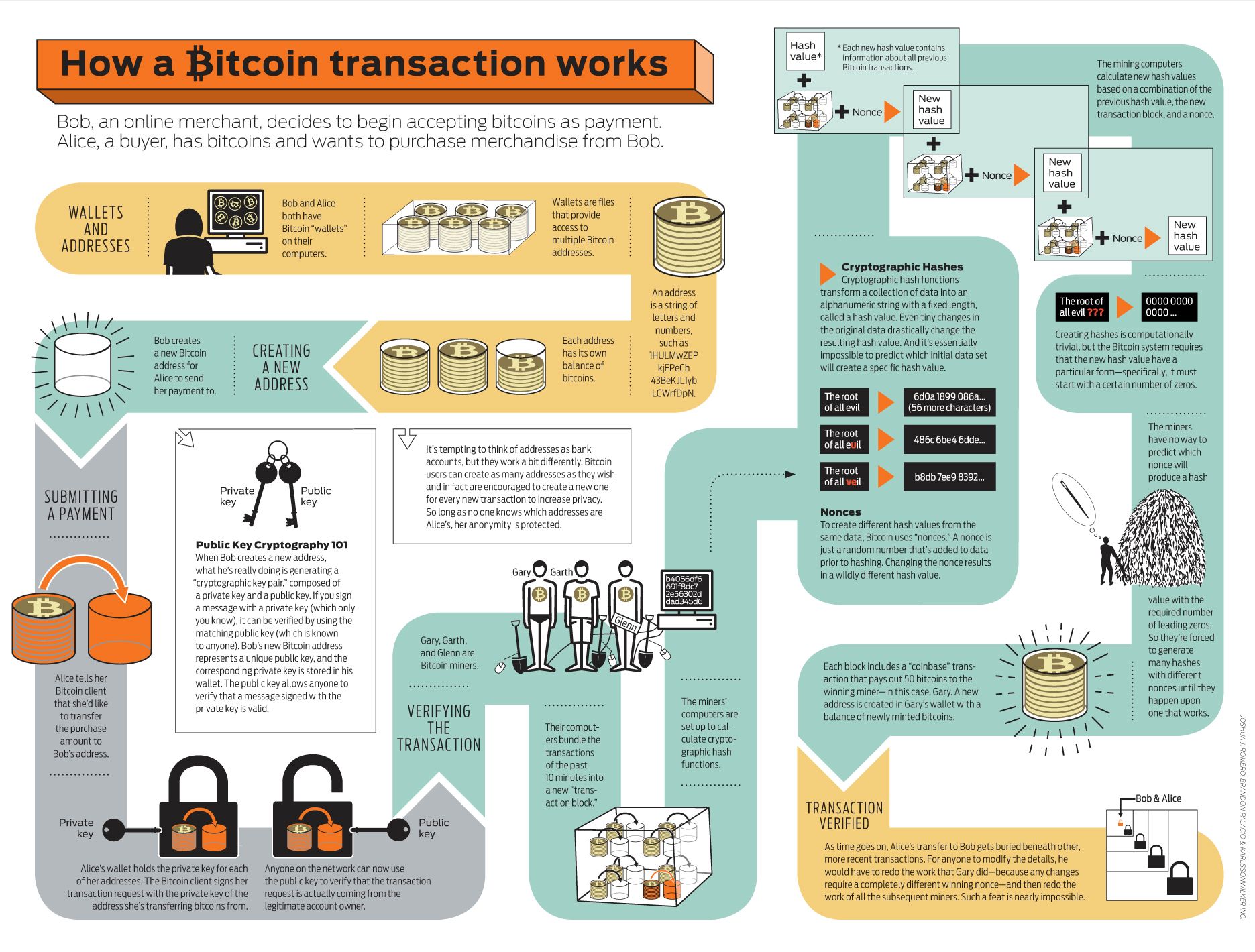
While virtual currencies can be bought for cash, the supply of this 'free' money comes from using complicated and heavy computer processes that lead to emergence of a coin or any such unit. 


Don't be sad when I tell you that fidgeting on that mac book pro or Dell inspirion won't let you manufacture even 0.01 of a full bitcoin.


If you don't understand what terms like a distributed timestamp, a valid hash or computing power (which means you are like me), you can't produce any. You have to buy them. 


There is no other way. That's all about freedom.


Money is serious business


In the real world, a central bank has a monopoly right to issue of coins and banknotes (fiat currency) for its own area of circulation (a country or group of countries such as Eurozone). 


They do this by regulating the production of currency by banks (credit) through a monetary policy. 


It’s an organised system of money supply and creation.


An organised system has checks and balances that would not let anybody be robbed off or fooled unless they threw caution to the wind.


Last week, a TV anchor got 'robbed' on prime time when he showed a virtual currency backed gift card to viewers.


On Friday, December 20, Matt Miller surprised his two fellow anchors – Adam Johnson and Trish Regan – with bitcoin gift certificates during his “12 Days of Bitcoin” segment. 


Johnson then flashed his certificate on the screen for roughly 10 seconds - more than enough time for a user to scan the digital code with his phone and take the gift for himself. Miller isn't amused. Neither should you.


If you are thinking woah this guy is totally against digital currencies, I am not. What I am against are these virtual currencies hawked as the best thing after Facebook or Google!


Facebook and Google met an unmet need. What do virtual currencies such as bitcoin offer that a dollar, a rupee or an euro doesn't?


When you keep a deposit in a conventional bank, you get deposit insurance.


In India, each depositor in a bank is insured up to a maximum of 1,00,000 (Rupees One Lakh) for both principal and interest amount held by him/her in the same right and same capacity as on the date of liquidation/cancellation of bank's licence etc.


There is no such thing in virtual currencies. At the most, and very rare, they would try to give you a portion back but that's a painstaking procedure.


The traditional hard money, which can be stored online in regulated banks with ease and can be used for just about everything, is an integral part of a system that has developed over thousands of years with trial and error method.


I would like you to believe that saving money you earned and withdrawing that money are easy today. You know it. Give me a nod.


Those ordinary yet gullible people who are going after virtual currencies are mostly collecting it as a novel form of investment -- the next 'in' thing if you may call it.


With the promise of virtual currencies being limited in supply, the manufacturers are taking your real money and giving something in return.


They highlight - you pay no high charges to banks etc like in the real world.


A day not too far


Imagine a day when this bitcoin bubble, which is exactly what it is now, would burst. There would be nobody to protect your money.


As the value of these so-called coins deplete and fall like a stone, you would try to sell them further driving down the price as scores of others create a supply storm.


What happens when a note is torn?


In India, the Reserve Bank has proper facilities for exchange of soiled and mutilated currency notes. Excessively soiled, brittle, burnt notes are also taken.


As an investment option, a bitcoin or a dogecoin or a megacoin isn't really good either. None of them a good and there's a full 67 of them.


Historical returns are hardly ever repeated in future. When you buy a share of, for instance Reliance Industries, you have liquidity. You can sell it with three clicks every time without batting an eyelid.


That kind of liquidity, platform or players are not available in the market right now for virtual currencies.


Plus the value of a virtual currency isn't based on fundamentals. When you buy a share you are making a bet on continued growth of the company which translates into earnings.


However, when you buy a virtual currency, you are buying it because you hope others would buy it tomorrow and you would time the market well.


That's how simple yet dangerous the valuation theory is for a virtual currency.


The price volatility of virtual currencies is way to extreme. Are you comfortable with a 10 per cent drop today of the money in your virtual currency value?


Spare a thought for those who bought a bitcoin for USD 1200 odd some weeks ago at its peak and have seen the rate fall to USD 800 now.


I am not trying to scare you.


We are living in strange times.

The politicians are not doing what you selected them for.

Your boss probably doesn't admire or let alone recognize that you exist.

Your friends are numbered, while enemies are many. It's okay to lose hope sometimes.


And suddenly at that opportune moment something like a virtual currency comes and we feel alive. As if our ticket has finally arrived.


Bad news first -- it hasn't.


Good news -- you are reading this and asking yourself when something appears easy and quick it probably isn't?


The Verdict


The infrastructure for virtual currencies simply isn't there now.


An ATM here or a restaurant run by a virtual currency enthusiast there isn't the system that one requires to protect one's own money, often hard-earned.


The risks outweigh the rewards by a heavy margin.


Look at safety first and then returns.


Nobody made more money by investing it in untested exotic sounding schemes that haven't stood the test of time.


Till the next time.


Feel free to criticize. Am okay with it. Write whatever you want about this post in the comment section (below)